


This article was originally posted as a 5-part LinkedIn series, and is recreated here as a single blog.
Moving a 350kg safe turned into something bigger: a crash course in strategy when everything goes sideways.
The plan was solid. The guy with the truck and forklift was lined up. Professional help for a professional problem—moving a 350kg gun safe without requiring reconstructive spinal surgery.
Then he got COVID.
COVID restrictions were still in place in Melbourne at the time. Get the spicy cough, go into isolation. No exceptions. Our interstate move was locked in for the next day—rental lease ending, removalists booked, everything coordinated around a timeline that didn’t care about our contractor’s test results. We didn’t have a backup crew we could call on and there was no chance of simply rescheduling due to the number of moving parts. So it was just us and a safe the size of a small car.
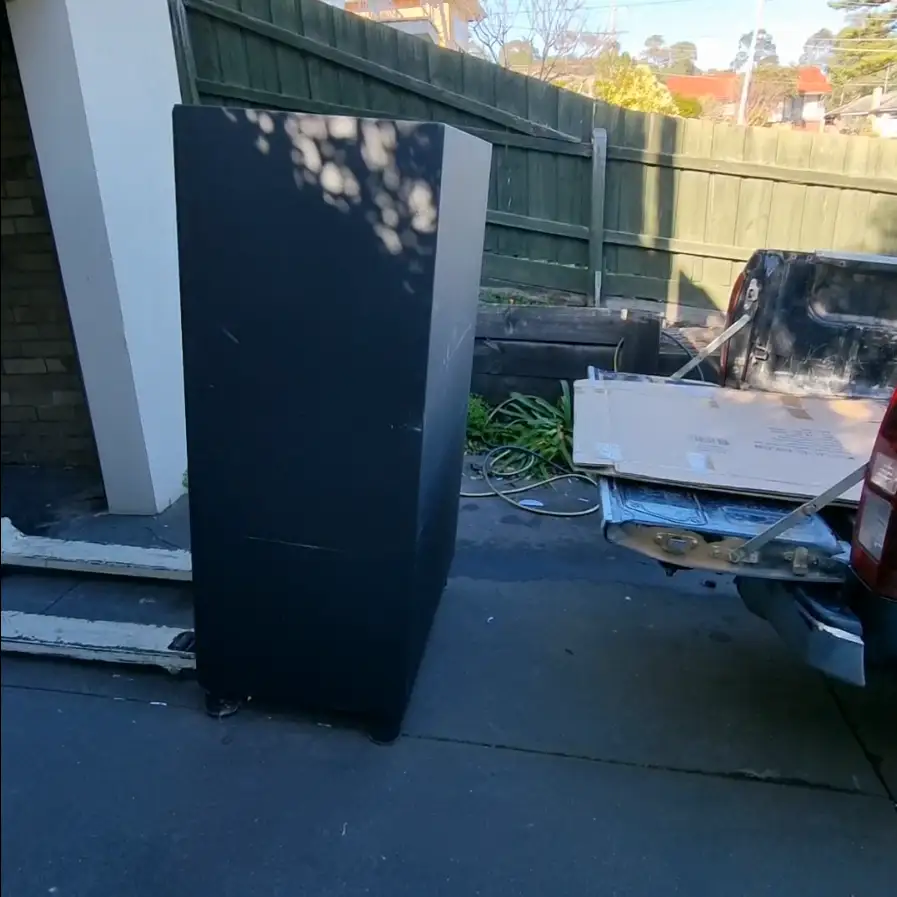
The safe sat there in the back of our garage like a steel monument to poor timing. Too heavy to lift, too awkward to grip, and fifteen metres of driveway between it and the truck. I stood looking at it for a solid minute, running through options that didn’t exist.
First problem: getting it from the back of the garage to the truck. I drove to the local hire shop and explained the situation. The guy behind the counter looked perplexed and started suggesting solutions that would have quickly added up to the value of the safe itself. Eventually, we worked out that a pallet jack could fit between the safe’s feet and lift it just enough to get it moving. Simple solution at a reasonable price, so I locked it in.
The pallet jack handled the driveway portion like a charm, although it’s times like these where you realize that the flat concrete isn’t actually flat. Getting the safe into the truck tray was where things got more difficult, and we had to get creative.
When Engineering Meets Desperation
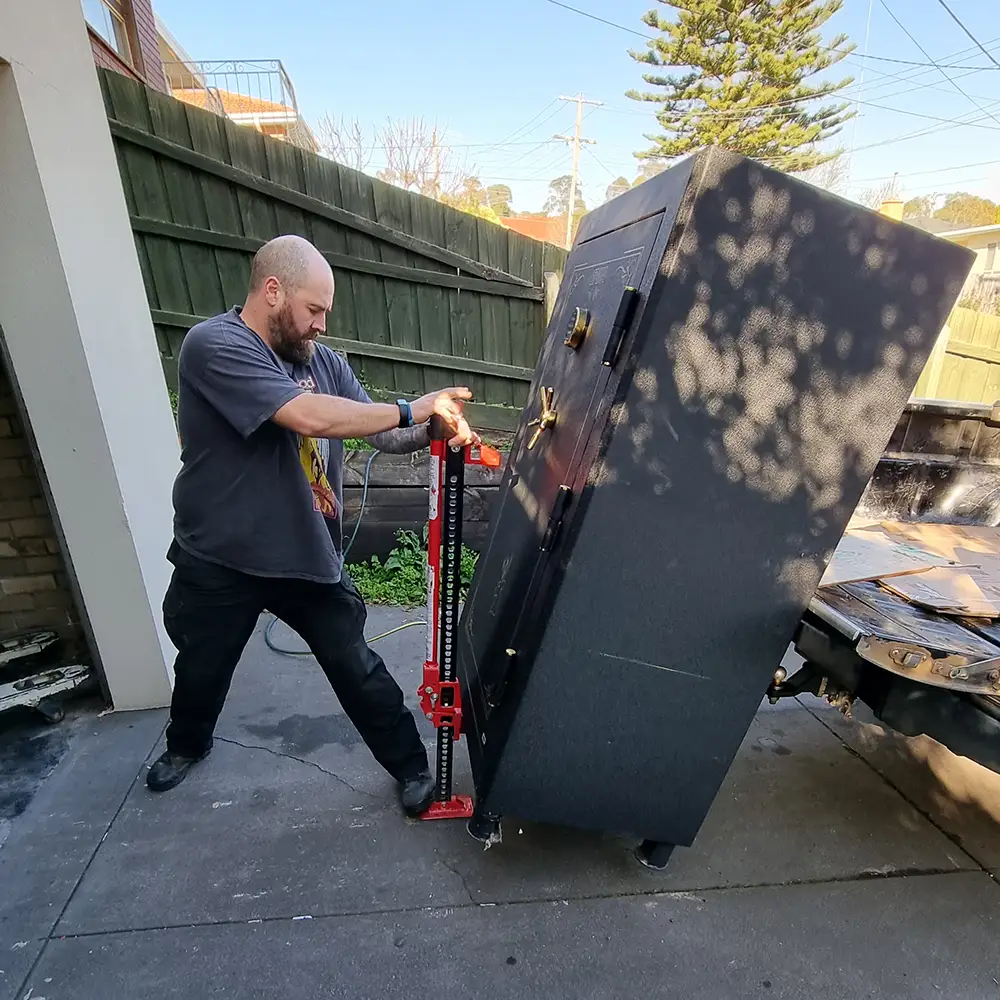
My first brilliant idea was to use a hi-lift 4WD jack to gradually raise the safe until its own weight and gravity kicked in. Seemed logical. The safe had a solid base, the jack had serious lifting capacity, and I had the kind of confidence that comes from not thinking things through properly.
Twenty minutes later, watching 350kg of steel swaying on a narrow jack base like a drunk elephant, I called it off. Too many ways for someone to get seriously hurt, and that someone was going to be me. Sometimes the smart move is admitting your clever solution is stupid before it proves the point in a dramatic way.
This left the approach that every chiropractor dreads: brute force applied through questionable lifting technique. Jokes aside, stronger men than I have done serious damage to themselves lifting lighter weights than this, so we took it slowly.
We positioned the safe so I could tip it against the truck tray. Was the tray rated to handle 350kg leaning against it? Probably not. But we were out of options, and time was disappearing too.
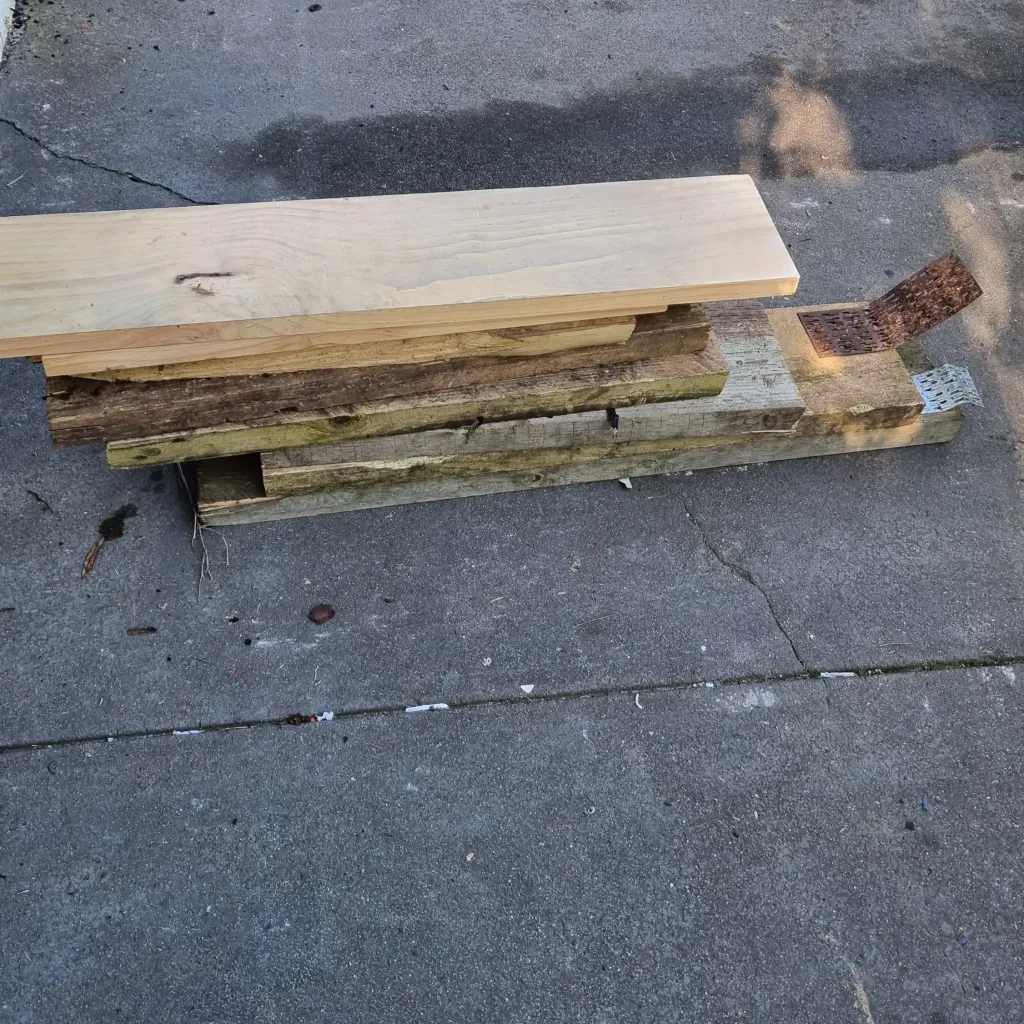
I got it to lean at about a 20-degree slope with only two of the four feet touching the ground. That’s when the real work started. I’d deadlift the safe just enough for Melissa to slide timber underneath, creating our fulcrum point. Then I’d lower it back down and we’d do it again.
We worked in careful increments, both of us aware this was the kind of job where one wrong move meant explaining to paramedics how exactly we’d managed to crush someone under a gun safe. My key phrase throughout was “get back”; if anything started going sideways, we had our exit strategy mapped out.
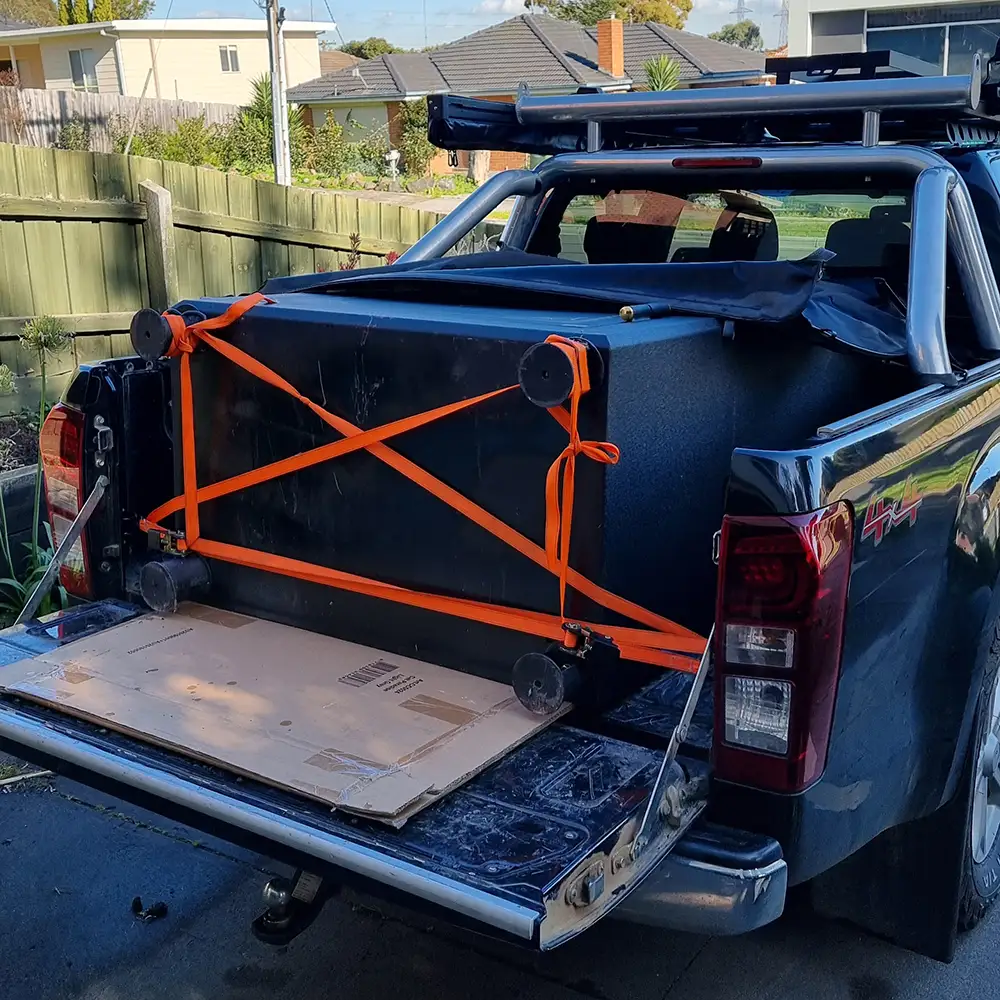
Six or seven deadlifts later, we’d slid enough random timber offcuts under the base that physics finally took over. The weight of the safe carried it forward, and it fell, almost in slow motion, gracefully into the truck tray with a thud that probably registered on seismographs.
The Professionals Weigh In
The real validation came when I delivered the safe to OSA for palletizing and interstate shipping. It took three of their crew, plus me, and a forklift, to get it out of my truck tray: professional equipment, a proper team, and it was still a laborious exercise to get done.
One of their team looked at me, looked at the safe, looked back at me. “How exactly did you get this thing in here?”
I explained the timber block fulcrum system, the careful weight transfer, and the controlled pivot. He shook his head in disbelief, the way you do when someone describes surviving something they probably shouldn’t have attempted.
The Real Test Came at the Other End
Unloading should have been the easy part. Gravity works both ways, right? Except that the safe had been loaded into the tray of my truck the wrong way when I picked it up some 2,000km away in Queensland. We managed to get it out of the truck bed, landing with all the grace of a dropped refrigerator. Not like we had any control over gravity, and we honestly hadn’t thought about the physics at the other end – another oversight on our part.
Now we had a different problem entirely. This thing was built like you would expect a 42-gun safe to be built—flat surfaces on every side, no external grip points, just 350kg of steel sitting there like an immovable brick. I muscled it into the corner of our new garage, figuring we’d sort it out later when our brains weren’t fried from the move. We had more important things to get to at this point.
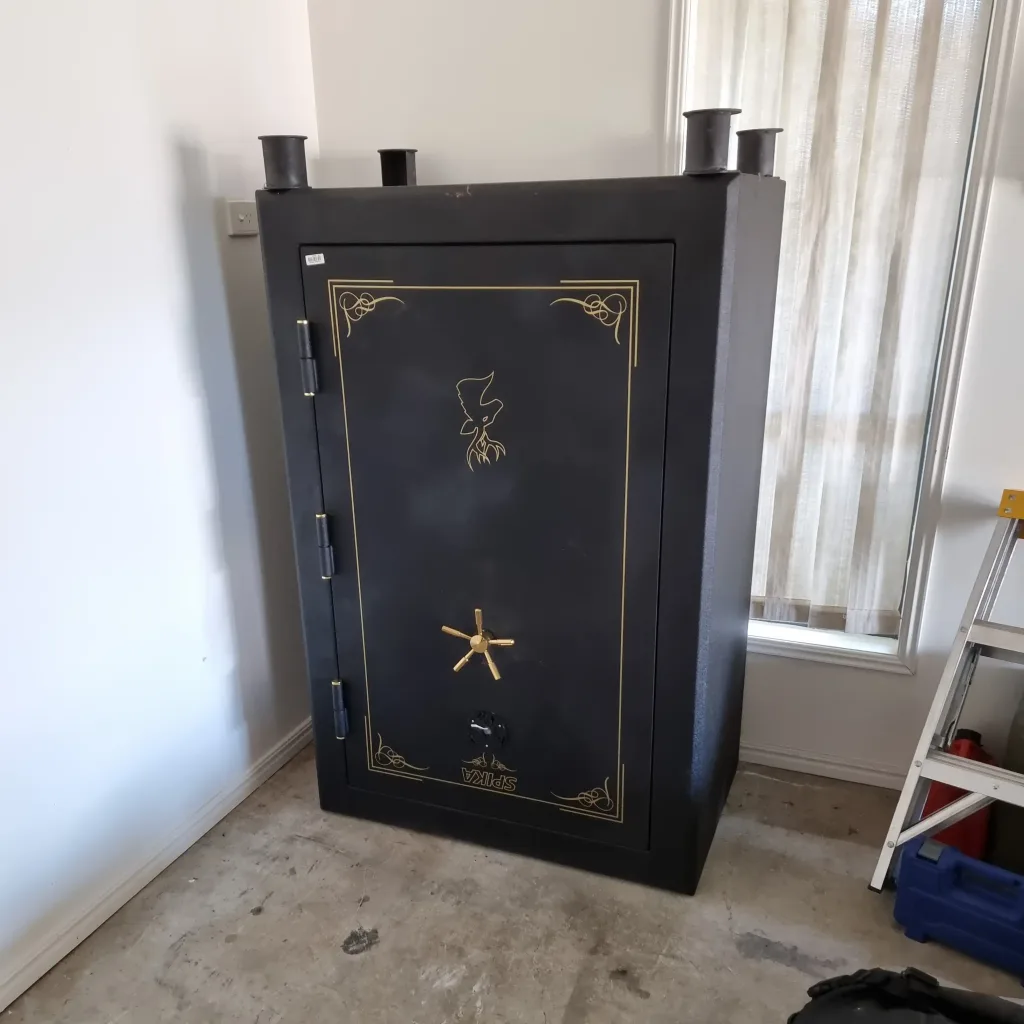
Later turned out to be sooner than expected. When I went to move our firearms from our secure transport storage back into the safe, I opened the safe door and watched as the steel door fell clean off its hinges. The door wasn’t physically attached; it just sat on the hinges, held in place by gravity. Upside down, they were just decorative, and this thing must have weighed 100kg on its own.
I stared at the door and thought, of course. Of course it did. Then I realized what we’d just gained: a leverage point.
Sometimes the Break Is the Breakthrough
With the door off, I could get my hands inside the safe body. I braced myself, got the safe up to my knee, and then applied the same questionable lifting philosophy that had worked at the loading end. It wasn’t pretty, and there were moments where I probably should have given up, but that’s not something I typically have in me (quitting).
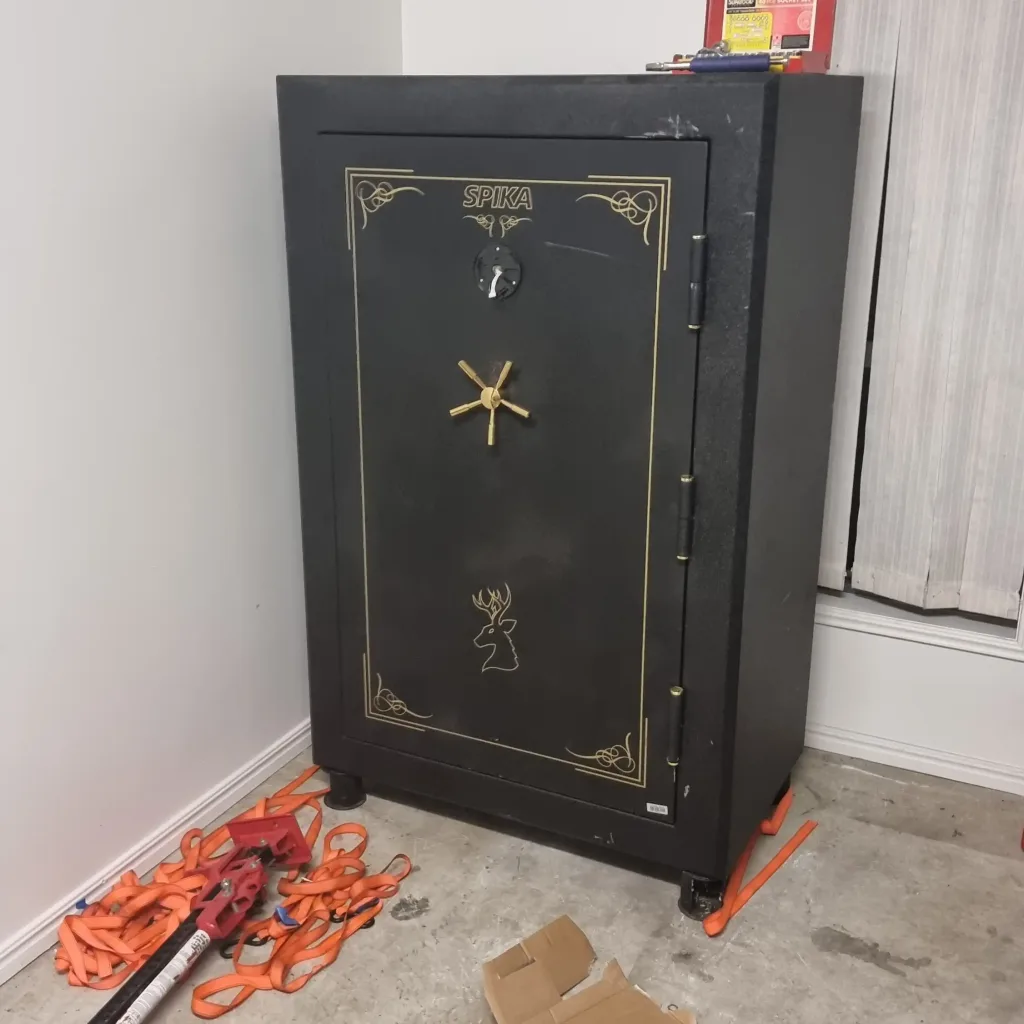
Once we had the safe body upright and in position, we had to get the door back on. That’s where the precision work started. There was no chance of manually lifting the door back on to the hinges, and we had to align it perfectly with the hinge mounting points. We ran ratchet straps over the top of the entire safe and door to control any lateral or other movement. I then grabbed the trusty hi-lift jack to lift it above the mounting points. Then we chucked the jack into ‘reverse’ and slowly backed it back down, while we aligned everything perfectly.
It took several attempts to get the door appropriately mounted. Each time, we’d think we had it, only to find the alignment was off by a fraction and the door would slip past. But eventually, the hinges seated, the door swung true, and we had our gun safe back in working order.
It wasn’t some huge celebration, but the sense of accomplishment felt great. We were oddly proud of something that shouldn’t have been necessary in the first place.
What This Teaches About Leading Under Constraint
Here’s the thing about problems like this: they don’t care about your timeline, your resources, or your preference for doing things the right way. They just sit there, immovable, until you figure out how to make them movable.
You think you’ve got it covered—pallet jack hired, truck ready, timing locked in. Then the plan breaks. Now it’s just you, a 350kg problem, and a deadline that won’t move.
What separates operators from everyone else is what happens next. Do you stand there cataloguing everything you don’t have? Or do you start looking at the timber offcuts lying around, figuring out where to place the fulcrum?
The safe door falling off taught us something important: sometimes what looks like another problem is the leverage point you’ve been missing. The trick is not panicking when things come apart, but looking for the opportunity that breakdown creates, and lean into it.
It’s imperative, though, that you always know your exit strategy. We never lifted anything without a clear plan for getting back to safety if it started going wrong. Risk needs management, not elimination. If you spend your business life trying to eliminate risk, you’ll never get anything done. You need to mitigate what you can, manage what you can’t mitigate, and just send it.
The Work Behind the Work
There was no elegant solution to any of this. No shortcut that would have made it easy. Just two people working through one mechanical problem at a time, with clear communication and zero margin for error.
That’s what real work looks like. Not the LinkedIn version where everything flows smoothly from strategy to execution. The kind where your lower back sends reminder bills for weeks afterward.
Most business problems don’t get solved in boardrooms with whiteboards and frameworks. They get solved by people willing to strip the weight, find the leverage point, and do what needs doing when the plan isn’t an option.
As for the safe, it was still working perfectly when I sold it in favour of a much smaller, lighter version that I can comfortably move on a hand truck / dolly (155kg). With a 2nd interstate and an international move now behind us, I’m glad I made that decision. I don’t miss the safe. But what it taught me about working under constraint stuck.
The take home message here is that strong operations create calm. Weak operations create noise. If delivery feels reactive, accountability is unclear, and leaders are stuck plugging gaps. Then, the business isn’t built to scale; it’s built to survive.
We’ve built a series of Health Checks that help businesses and leaders identify the structural issues, trade-offs, and gaps that often go unnoticed or unaddressed. Each question is designed to help you look beyond the obvious and uncover the real causes behind dysfunction.


