



Table of Contents
Time, as they say, waits for no one! In the fast-paced world of small businesses, it often feels like you’re racing against the clock, trying to juggle multiple tasks while barking orders at your to-do list. Fear not! This article is here to equip you with some serious time management hacks that will not just help you survive but thrive!
Understanding the importance of time management in small businesses
Before we dive into the nitty-gritty solutions, let’s take a moment to understand why time management is the unsung hero of small businesses. Imagine running around like a chicken with your head cut off; that’s what poor time management looks like, and it’s about as effective as wearing a raincoat in a swimming pool!

The role of effective time management in business success
Effective time management allows small businesses to maximise productivity, reduce stress, and lead to happier teams. When time is managed well, tasks are completed more efficiently, resulting in better customer relationships and a business that runs smoother than a well-oiled machine.
Much like a good cup of tea, time management is about balance. Get the proportions right, and you have an invigorating brew; get it wrong, and you’re left with something undrinkable!
Common time management challenges faced by small businesses
What’s standing in the way of your time management glory? Well, small businesses face a plethora of challenges, including constant interruptions, lack of clear goals, and overwhelming to-do lists. Sounds familiar, doesn’t it?
Moreover, many entrepreneurs find it hard to delegate. It’s akin to letting your cat babysit—adorable but ultimately chaotic! As the owner, you need to learn to step back and trust your team to handle responsibilities without micromanaging.
In addition to these challenges, the digital age presents its own set of distractions. With notifications pinging from every corner of the internet, it’s all too easy to lose focus. Social media, emails, and even the latest viral videos can derail a perfectly planned day. To combat this, small business owners must develop strategies to minimise these distractions, such as setting specific times for checking emails or using apps designed to block distracting websites during work hours.
Another hurdle is the tendency to underestimate the time required for tasks. This phenomenon, often referred to as the planning fallacy, can lead to unrealistic expectations and increased pressure. By analysing past projects and their timelines, small business owners can create more accurate estimates, allowing for a more realistic approach to scheduling and task management. This enhances productivity and fosters a culture of accountability within the team, as everyone becomes more aware of the time required to complete their responsibilities.
Essential time management hacks for small businesses
With problems identified, it’s time to wield your time management sword and conquer the chaos! Here are some essential hacks designed to help you manage your time like a pro.

Prioritising tasks: The key to efficient time management
First up, prioritisation! Think of it as sending out an ’emergency SOS’ to your team. List tasks based on urgency and importance, and then tackle them in that order. There are countless ways to prioritise, but the Eisenhower Box has to be one of the most effective. It divides your tasks into four quadrants—urgent and important, important but not urgent, urgent but not important, and neither. How clear is that?
This method will save you from spending hours on a task that doesn’t actually move the needle. It’s like spending the entire day perfecting your office plants when a major client is due to call. Pruning those ferns can wait!
Moreover, it’s essential to review your priorities regularly. The business landscape can shift rapidly, and what was once a top priority may no longer hold the same weight. You can adapt to changes by conducting weekly reviews, ensuring that your focus remains aligned with your business goals. This flexibility enhances productivity and fosters a proactive mindset within your team.
The power of delegation in time management
Next, let’s discuss delegation. Are you holding onto tasks tighter than a kid holds onto their ice cream cone in summer? You might feel like handing off responsibilities is like asking your dog to drive your car, but your team is capable of stepping in.
Delegating frees up your time and empowers your employees. Think of it as creating a band—everyone has their role, and together, you create an amazing symphony.
Additionally, effective delegation involves clear communication. When you assign tasks, ensure your team understands the objectives and expectations. This clarity not only boosts their confidence but also enhances accountability. A well-delegated task can lead to innovative solutions and fresh perspectives, as team members often bring unique insights that you may not have considered.
Making use of digital tools for time management
In this digital age, why not let technology lend a helping hand? There are countless tools designed to enhance your time management game. Applications like Trello, Asana, Monday.com and Todoist can help streamline your tasks and keep everyone on the same page. We use several tools at Refracted Aspect Coaching & Consulting, but Asana is our current task management tool. A lot of these tools have ‘free forever’ accounts, even for teams of 2 or 3, that give small businesses access to entry-level tools. You must try and find a tool that can grow with your business so you don’t have to look at something else in a few months.
Utilising shared calendars can also reduce the number of “Where are we now?” emails. Imagine a world where your team only interrupts you with witty banter instead of questions about deadlines. Oh, what a joy that would be!
Moreover, integrating time-tracking software can provide valuable insights into how time is spent across various projects. Tools like Toggl or Clockify can help you identify patterns in your workflow, revealing areas where time may be wasted or tasks that could be optimised. With this data, you can make informed decisions about resource allocation and adjust your strategies for maximum efficiency, ensuring every minute counts in your pursuit of success. We utilise Clockify to track work we do for clients, but make sure to remember to turn it on when you start on a task!
Implementing time management strategies in your business
So, we’ve gathered a bunch of hacks, but what’s the next step? It’s time to implement strategies that solidify these hacks into your daily business operations.
Steps to creating a time management plan
Start with a time audit—yes, I know it sounds tedious, but stick with me! Track where your time goes for a week. You might discover you spend hours on tasks that aren’t even on your radar—like scrolling through social media while telling yourself you’re researching competitors!
Dan Martell’s book Buy Back Your Time includes a fantastic tool for this. Visit Dan’s website and check out the free resources on Buy Back Your Time.
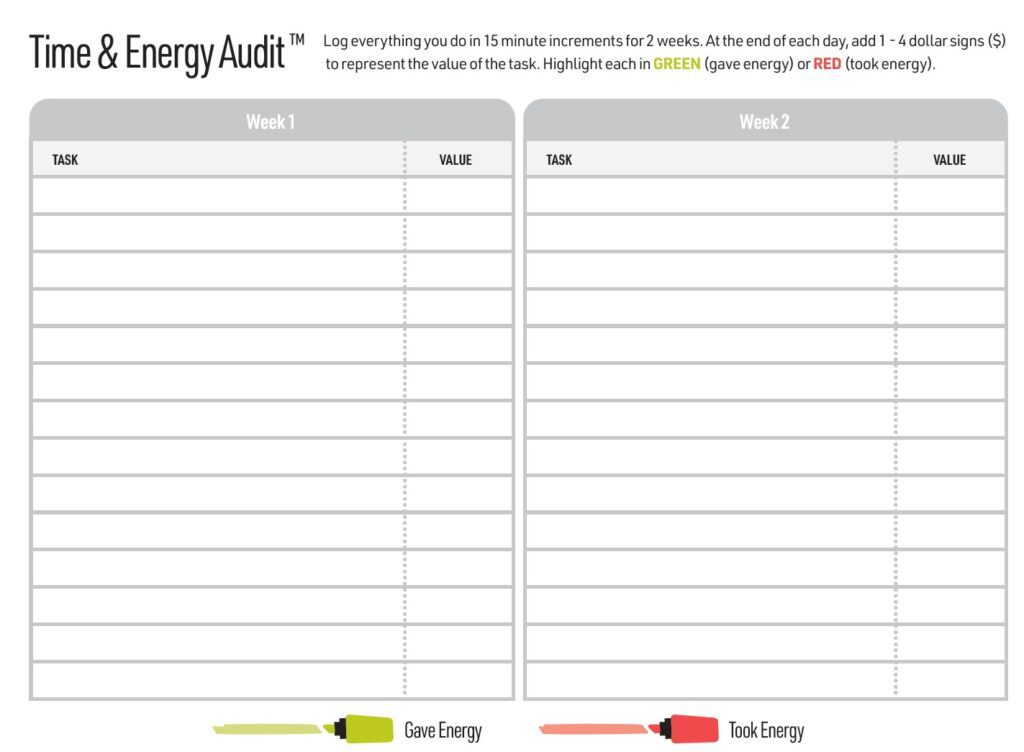
Time & Energy Audit from Dan Martell’s ‘Buy Back Your Time’ book.
Once you’ve identified the time-wasters, develop a structured plan. Set clear goals, track progress, and adjust as needed. It’s your roadmap to time management success! Consider using digital tools or apps to help you visualise your tasks and deadlines. These tools can provide reminders and alerts, ensuring that you stay on track and maintain focus. Additionally, breaking larger projects into smaller, manageable tasks can make the workload less overwhelming and more achievable.
Training your team in time management
Don’t keep all the knowledge to yourself. Train your team in time management as well. After all, a chain is only as strong as its weakest link! Conduct workshops, or even better, make it fun with quizzes and games. Who knew learning about deadlines could be this engaging?
As your team becomes savvier, your business will operate like clockwork. It’s about fostering a culture where everyone understands the value of time, thus creating a cohesive unit. Encourage open discussions about time management challenges and successes within the team. This not only builds camaraderie but also allows for the sharing of best practices and innovative solutions. When everyone is aligned and accountable, your business’s overall productivity will see a noticeable boost.
Monitoring and adjusting your time management strategies
Lastly, remember that time management is not a one-off task. Regularly review and adjust your strategies. Much like adapting a recipe, tweak the ingredients until you find the perfect balance!
This continuous monitoring ensures that you stay on top of your game and prevents those pesky old habits from creeping back in. Keep the momentum going! Schedule regular check-ins to assess the effectiveness of your time management plan. These sessions can provide valuable insights into what’s working and what isn’t, allowing you to refine your approach. Additionally, consider seeking feedback from your team on the strategies in place; their perspectives can be invaluable in shaping a more effective time management framework that benefits everyone involved.
The impact of good time management on business growth
We’ve equipped you with all the hacks, now let’s explore how mastering time management can lead to monumental business growth. Hold onto your hats—this is where the magic unfolds!
How time management contributes to productivity
Efficient time management invariably leads to increased productivity. When employees know how to manage their time, they can focus on high-value activities that propel your business forward. Think of it as turning on a turbo boost—suddenly, everything moves faster and in the right direction.
Moreover, a productive team tends to be a happy one—as their stress levels diminish, so does burnout. Ignoring time management is akin to neglecting your car’s oil change; it won’t be long before things start breaking down!
Time management and its effect on employee well-being
As we previously mentioned, good time management isn’t just about the business—it’s also about your employees’ well-being. A workforce that manages its time effectively is less stressed, enjoys a better work-life balance, and tends to be much more engaged.
An engaged employee is a creative employee. With less worry clouding their minds, they can brainstorm and innovate, adding that extra sparkle of brilliance to your business!
The link between time management and customer satisfaction
Finally, let’s touch on the ultimate goal—customer satisfaction. Happy customers come back for more! Efficient time management means you can deliver products or services promptly without compromising quality.
When your customers see that you value their time, their loyalty to your business will flourish like daisies in the spring. Who doesn’t want raving fans willing to spread the word about your business?
In conclusion, mastering time management is a worthy investment for any small business. Armed with these hacks, you’ll find that time is less of an enemy and more of a trusted ally. So, go forth and conquer—your business will thank you!


