


Mayhem was about 7 months old when he taught me what happens when you don’t assess risk properly.
We were heading out for a training session at the local dog park, just as dusk was falling, because we knew it would be empty. It’s the only time we’d typically take him there. Nothing demanding was planned; I just wanted to get his brain engaged while letting him have a run, chasing down his glow-in-the-dark ball. I was wearing boots that weren’t done up, pants without a belt that I’d slipped on to save my legs from mosquitoes, with a 5.11 backpack full of training aids and toys.
I’d seen the Domino’s pizza delivery guy coming along the footpath while we were pulling into the car park, all lit up and sparkly, reflective strips catching the dusk light. Mayhem had seen this exact thing before when we were safely inside the fenced area, fascinated by it because he’d never seen anything like it. To him, it was half curiosity, half “that looks like something I’d like to chase.”
I got out of the car and put him on his leash while he was still in the back seat. At that moment, the delivery guy came past our car and continued toward the bridge. The dog park gate was about 50 meters away in the opposite direction, and I let Mayhem jump down from the back seat. A few seconds later — I still don’t know how it happened — but he wasn’t on his lead and he was taking off at speed after the pizza guy, who was now 150 meters away.
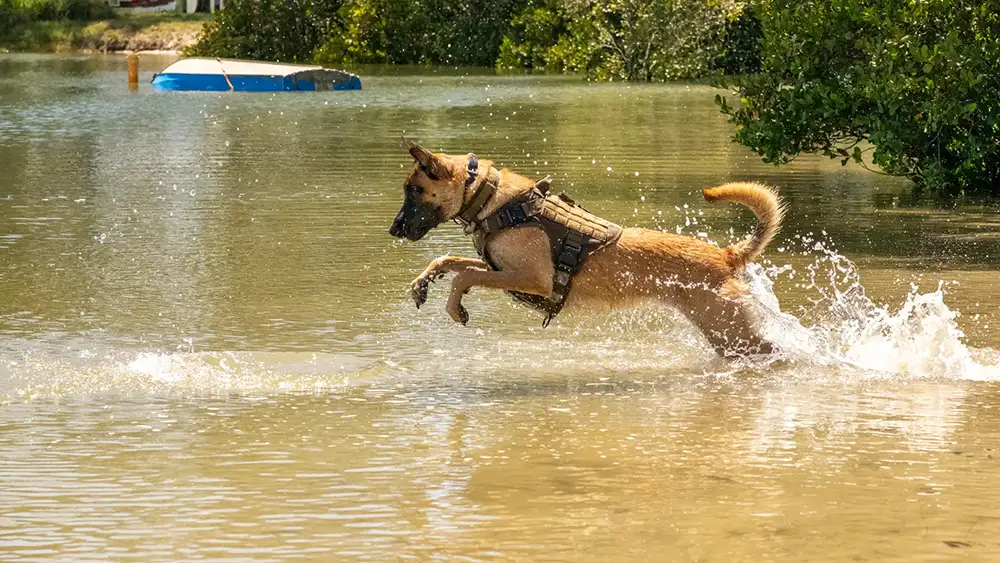
When Equipment Fails, You React
My first reaction was to yell his name, followed by “no, come”, but I immediately realized there was no chance of him listening. The appeal of that bright, shiny bike was too high, so I took off at full sprint. Melissa froze, shocked as I was. I just reacted faster this time.
To my advantage, I knew where the bike rider was heading. There was a bridge about 250 meters away, but the path curved toward it at the last minute. While Mayhem took off along the path, I sprinted straight across the open grass to try and cut him off. My primary concern was keeping him away from the road. It was dusk with busy traffic, and I needed to stay between him and any cars. If I had to jump in the road before he got there, cars were more likely to spot me than a fawn-colored dog sprinting through the ows.
A chain-link fence saved us both in the end. It started before the bridge, which meant he couldn’t actually reach the rider and had to double back along the fence line to go after him. That gave me enough time to get his attention and redirect him onto me as the more exciting object.
Once close enough, I crash tackled him to get control and waited for Melissa to catch up; I’d discarded everything I had in my hands, leash included, terrified he was going to get onto the road. He was in full activation mode — crazy eyed, “didn’t get to bite anything, this is bullshit” mood.
Taking off at full sprint across an open field with adrenaline pumping, loose boots, pants trying to fall down, and a backpack full of training aids bouncing on my back was not how I’d envisioned the night unfolding. But there’s the crux: I didn’t have a plan, hadn’t done a risk assessment, and ended up making critical decisions at speed without any backup.
Definitely not the best way to manage a Malinois, or a business.
What You Miss When You Don’t Plan
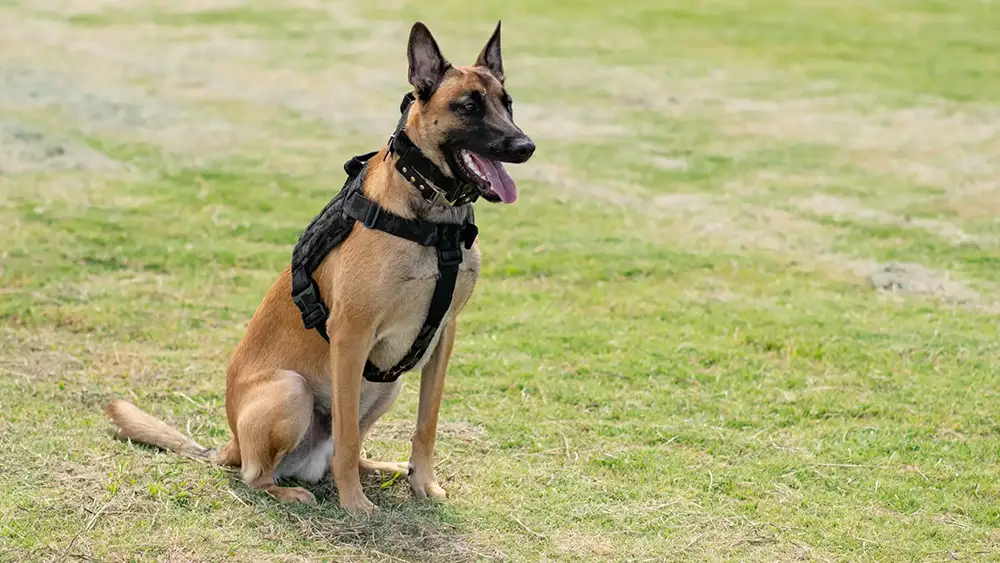
Belgian Malinois are exceptional dogs. The breed you see scaling walls in military operations, taking down suspects in police work, and performing complex tasks in movies like John Wick and Zero Dark Thirty. They’re intelligent, agile, high-energy working dogs that require structure, mental stimulation, and disciplined training. They’re a challenging breed at the best of times, and why I wanted one in the first place. But they’re also a 32kg / 70 pound or more fur missile when something triggers their drive. In the right hands, they’re protectors and loyal companions, yet without proper preparation, they become a liability.
This plays out in business constantly when leaders assume their systems will work, their key people will stay, and their markets will remain predictable. When something breaks those assumptions, they find themselves sprinting across unfamiliar territory, making critical calls without proper preparation.
Risk Management Isn’t Paranoia
This entire scenario was my fault. I should have worn proper shoes that were done up, taken the time to slide a belt through the loops on my pants, and potentially even waited until the delivery rider was completely out of sight. We’d done countless hours of training with reputable trainers at this stage, and I made the mistake of thinking we had control of our young Mayhem (yes, I see the irony). I hadn’t assessed what could go wrong or prepared for the moment when my first approach failed.
In business, this means asking the uncomfortable questions:
- If you stepped away for 30 days, what parts of the business would grind to a halt?
- When something breaks — a system, a process, a delivery — how quickly do you know about it, and what happens next?
- If your top sales professional left tomorrow, what part of your sales process would break, and how fast?
- What happens when revenue dips unexpectedly, and do you have a plan, or do you just start cutting?
Risk management means identifying the specific ways your assumptions could break and having systems that work even when your first plan doesn’t. It means being prepared to lead when circumstances demand immediate decisions.
There’s an old saying I use with teams: plan the work and work the plan. Most leaders skip the first part and wonder why they’re always scrambling.
Structure Enables Response
The most prepared leaders aren’t the ones with perfect plans; they’re the ones who’ve anticipated failure points and built systems to handle them. They know where they’re vulnerable, have backup approaches ready, and maintain the resources and clarity to pivot when conditions change unexpectedly.
They don’t assume their “lead” will hold. They plan for the moment it slips.
The Questions That Matter
Before your next strategic move, ask yourself:
- What could break your assumptions?
- How prepared are you to respond when something goes wrong?
- Do you have the systems, resources, and mental clarity to lead effectively, or will you be scrambling in loose boots?
- Where are you flying blind, depending on things working perfectly without visibility or control when conditions shift?

When Your Lead Slips
That night ended with Mayhem back under control and no serious damage to anybody except the psychological trauma we’d gone through. But it reinforced a critical truth: when you don’t assess risk properly, you end up making decisions under pressure with incomplete preparation and higher stakes than necessary.
After that night, I started assessing distance from roads before we got out of the car, scanning for blind spots where people or objects might emerge without warning. Mayhem wore both his tactical harness and his collar on every training session, giving me two handles instead of one if I needed control. We implemented new tools and did a heap more training on recalls and environmental triggers. When we went off-leash anywhere (after countless more hours of training), we stayed far more alert for other people showing up unexpectedly with their dogs, and we’re all better off because of it.
In business, the stakes are usually higher than a dog chase. Poor risk assessment means lost opportunities, damaged relationships, and blindsides you didn’t see coming, not just a heart-pumping sprint across a field.
You can’t lead effectively when you’re constantly reacting to problems you should have anticipated.
Refracted Aspect works with leadership teams who want clarity across marketing, operations, revenue, and finance. We help leaders build systems that work even when assumptions break and recover quickly when they need to pivot. How does your business respond to the unanticipated?
Our Health Check Hub features a range of diagnostics that help identify blind spots within businesses and provide initial insights into how to address them.


